
Architectural Lighting · 3 min read
Linear & Profile Lighting: Creating Seamless Lines of Light
From concealed ceiling details to furniture and cabinetry, linear lighting can create clean architectural lines while adding depth and atmosphere.
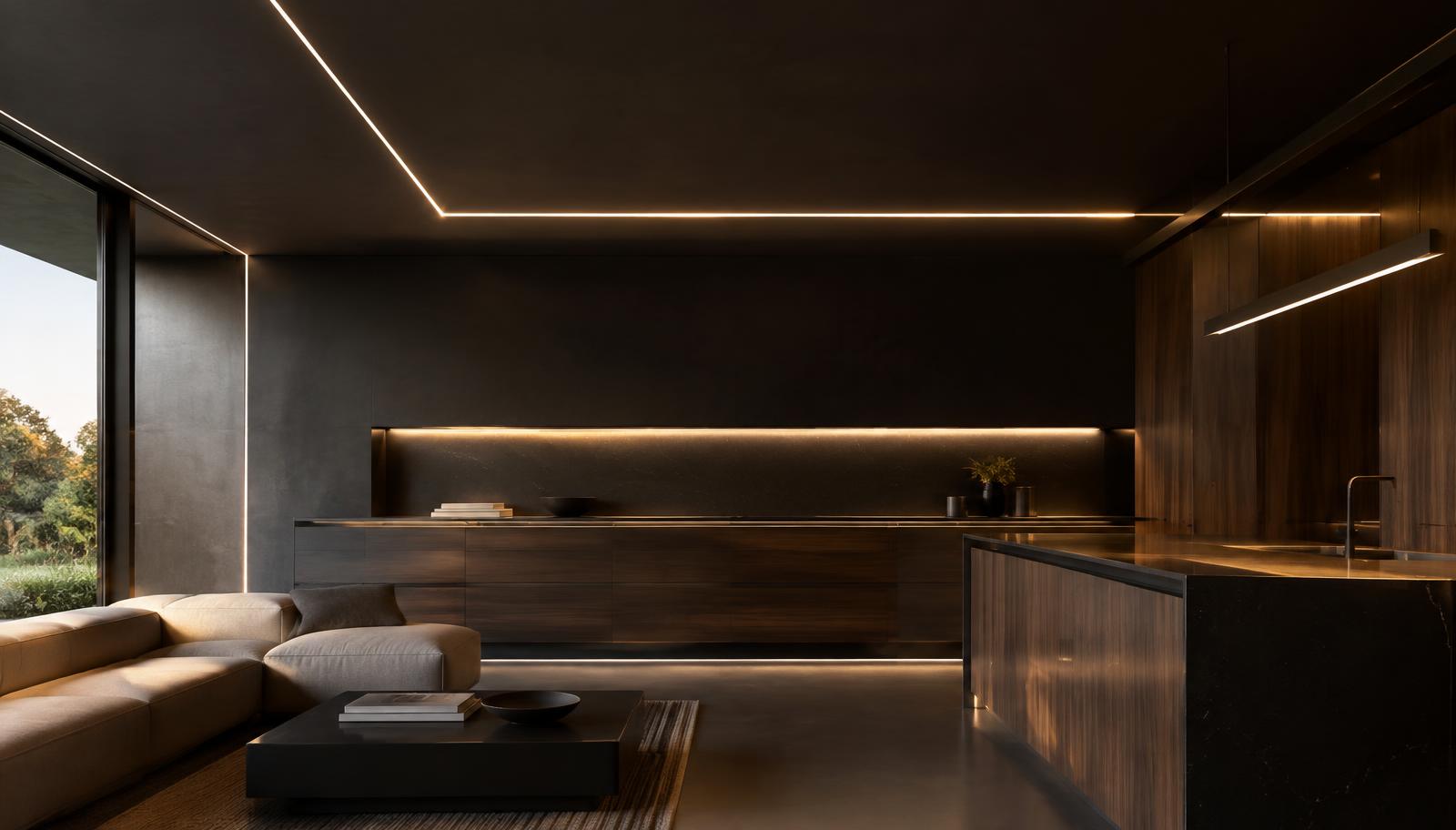
Some of the most striking interiors are defined not by fixtures but by lines — a crisp slot of light across a ceiling, a soft glow beneath floating joinery, a continuous line tracing a stair.
Linear and profile lighting make these effects possible. Understanding how they work helps architects, designers and homeowners use them with precision.
What is linear lighting?
Linear lighting describes any light source designed to produce a continuous line rather than a point. It includes slim linear fixtures, LED strip lighting and linear modules on track systems. The common goal is an even, unbroken line of light.
What is profile lighting?
Profile lighting combines LED strip with an aluminium or silicone profile — a channel that houses the strip, manages heat and holds a diffuser. The profile determines how the light is mounted (recessed, surface or suspended), how it looks when switched off, and how smooth the line appears when switched on.
Silicone profiles can bend around curves and suit applications where flexibility or a softer finish is needed.
Why profile lighting creates a refined appearance
- The diffuser softens individual LED points into a uniform line.
- The profile provides a crisp, straight edge that aligns with architecture.
- Recessed profiles sit flush with plaster or joinery for a minimal finish.
- Accessories such as end caps, joiners and corners keep runs neat and continuous.
Concealed lighting
Concealed lighting hides the source entirely and shows only the light. A strip tucked behind a ceiling edge, under a shelf or behind a mirror produces a soft glow that seems to come from the architecture itself. The success of concealed lighting depends on sightlines — the source should not be visible from normal viewing positions.
Cove lighting
Cove lighting directs light upward from a ledge or recess near the top of a wall, washing across the ceiling. It creates gentle, indirect ambient light and can make ceilings appear higher. Leaving enough space between the strip and the ceiling helps the light spread evenly without hot spots.
Ceiling applications
Recessed linear profiles can be set into plasterboard ceilings as clean slots of light, running continuously or forming geometric patterns. They can provide ambient light in corridors and living areas, or define zones in open-plan spaces. Suspended linear fixtures work well over kitchen islands, desks and meeting tables.
Wall applications
Vertical linear lines can frame doorways, mirrors and feature walls. Profiles at skirting level provide low-level guidance lighting, while profiles at the top of a wall can wash downward to reveal texture.
Wardrobes, cabinetry and furniture
Wardrobes
Profiles along the front edge or inside the frame light clothing evenly. Door or motion sensors can switch the light on automatically when the wardrobe opens.
Cabinetry
Under-cabinet profiles provide shadow-free task light on kitchen worktops. Lighting inside glass-fronted cabinets or open shelving turns storage into display.
Furniture integration
Floating beds, vanities, TV units and headboards gain lightness with a soft glow beneath or behind them. Integration works best when it is planned with the joiner, so that channels, cable routes and driver locations are built in.
Indirect illumination
Indirect light — bounced off a ceiling, wall or surface before reaching the eye — is comfortable, low in glare and flattering. Linear and profile lighting are among the most effective ways to create it, which is why they are so often used for ambient layers in residential and hospitality interiors.
Creating continuous architectural lines
Continuous lines depend on detail. Consider run lengths and how strips will be joined, where drivers will be housed and accessed, how corners will be handled, and how the line will start and finish. Choosing the right strip, profile, diffuser and driver together — rather than separately — gives the most seamless result.