
Lighting Technology · 4 min read
COB vs Traditional LED Lighting: What's the Difference?
COB technology has changed the way modern architectural spaces are illuminated. Understand the difference and where COB lighting works best.
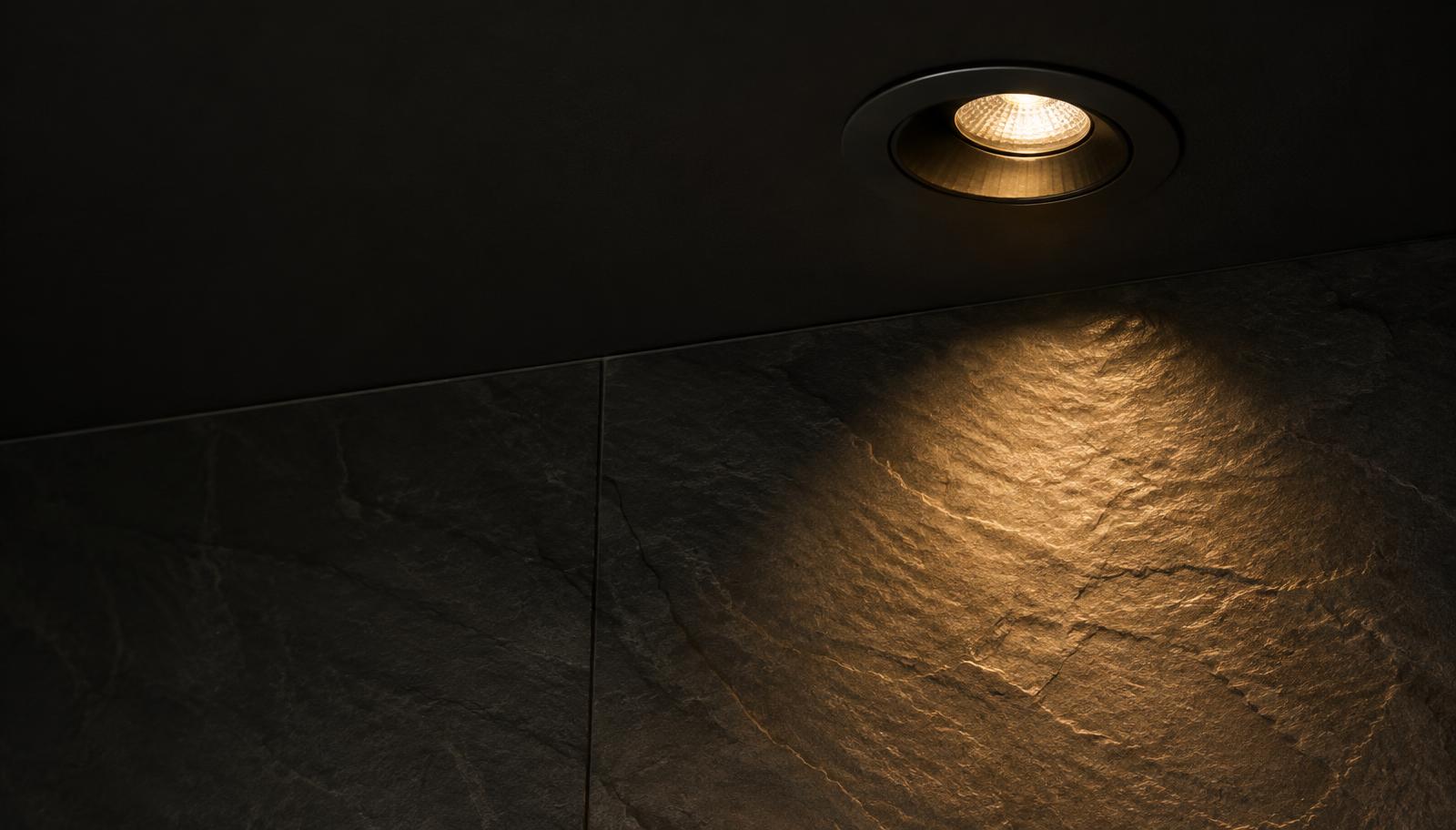
Walk into a contemporary interior and many of the downlights and spotlights you see will be COB fixtures. The term appears constantly in product catalogues, yet it is rarely explained.
This guide sets out what COB means, how it differs from more conventional LED arrangements, and how to decide where each approach fits best.
What is COB LED technology?
COB stands for Chip on Board. Instead of mounting individually packaged LEDs onto a circuit board, many small LED chips are bonded directly onto a single substrate and covered with one continuous phosphor layer.
The result is a compact, uniform light-emitting surface that behaves more like one bright source than a cluster of separate points.
How COB differs from conventional LED arrangements
Many traditional LED fixtures use SMD (Surface Mounted Device) LEDs — individually packaged chips spread across a board, often behind a diffuser. Both approaches are well established, and each has its place.
- COB: a single, dense light-emitting area — well suited to focused, controlled beams.
- SMD arrays: light spread across a wider area — well suited to broad, diffused illumination such as panels and battens.
- COB fixtures typically pair with a reflector or lens to shape the beam.
- SMD fixtures typically pair with a diffuser to soften and spread the light.
Light consistency
Because a COB source emits from one continuous surface, the light leaving the fixture tends to appear smooth, with a single, clean shadow. Multi-point sources can sometimes produce multiple faint shadows or a visible dotted pattern when viewed directly, which is why they are usually hidden behind a diffuser.
Colour consistency between fixtures matters just as much as consistency within one. On any project, it is sensible to use fittings from the same product family and colour temperature so that adjacent lights match.
Beam control
A compact source is easier to control optically. This is the main reason COB is favoured for spotlights and accent downlights: a reflector or lens can shape a small, bright source into a precise beam, whether narrow for highlighting a painting or wider for washing a wall.
When selecting fixtures, look at the beam angle listed in the product specification. Narrower angles create more defined pools of light; wider angles give softer, more even coverage.
Visual appearance
COB downlights are often designed with the source set back inside the fixture. This recess, sometimes combined with a textured or dark reflector, reduces the brightness seen from normal viewing angles and helps the ceiling look calm — the light is visible on surfaces rather than at the fitting itself.
Architectural applications
COB fixtures suit applications where direction and contrast matter: feature walls, artwork, columns, joinery and display. They are frequently used in adjustable or tilting housings so the beam can be aimed precisely after installation.
Residential applications
In homes, COB downlights work well in living and dining areas where a more focused, characterful light is preferred over flat, even illumination. Spotlights can pick out a textured wall behind a sofa or a sculpture in a niche. In corridors, a rhythm of COB downlights creates a considered sequence of light pools.
Commercial applications
Retail interiors use COB spotlights, often on track or magnetic systems, to draw attention to merchandise. Hotels and restaurants use COB downlights to create intimate pools of light over tables. Offices and receptions may combine COB accents with softer, diffused panels for general lighting.
What to consider when selecting COB lighting
All of these details should come from the specific product's documented specification. Where a value is not listed, ask for confirmation before specifying.
- Beam angle — match the spread to the task: narrower for accent, wider for general light.
- Colour temperature — choose warm, neutral or cool to suit the space (see our colour temperature guide).
- CRI — a higher colour rendering index shows materials and finishes more faithfully; check the product's listed value.
- Wattage and output — size the fitting to ceiling height and the brightness needed.
- Cut-out size and housing — confirm the ceiling opening and depth required.
- Fixed or adjustable — adjustable housings allow aiming at walls or objects.
- Driver compatibility — confirm the driver type supplied or recommended for the fixture.
Choosing between the two
Neither approach is universally better. COB excels where you want control, contrast and a clean, focused beam. Diffused SMD arrangements excel where you want broad, even, soft light. Most well-designed interiors use both — each where it performs best.