
Lighting Guide · 3 min read
How to Plan Lighting for a Modern Home
A well-designed home rarely relies on a single type of light. Learn how to layer architectural, functional and accent lighting to create a balanced environment.
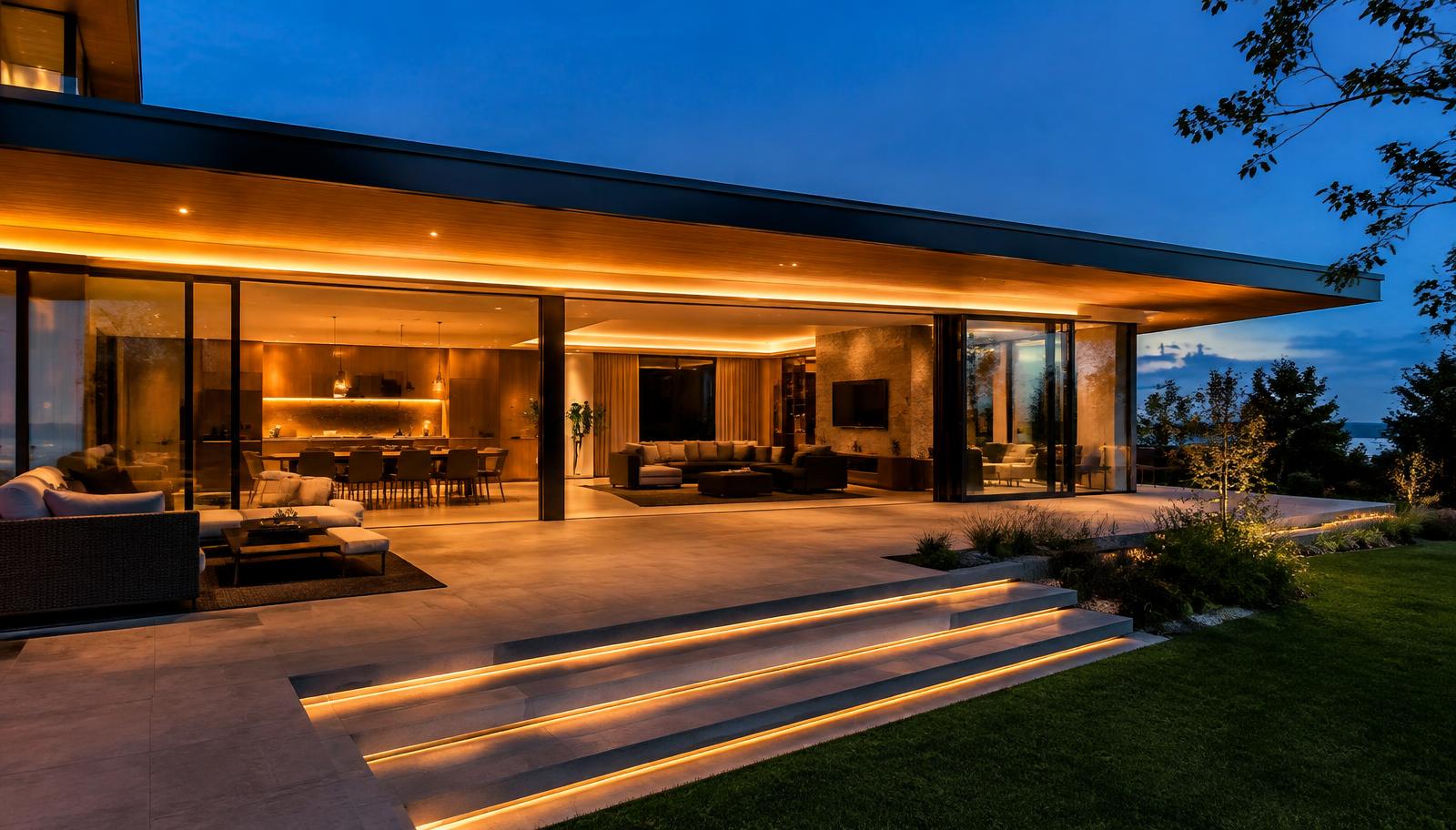
Whether you are building, renovating or redesigning, lighting is one of the few decisions that affects every room, every hour after sunset.
A good lighting plan is not about how many fixtures you install. It is about choosing the right kind of light for each purpose, and layering them so the home feels comfortable, practical and beautiful.
Understanding lighting layers
Plan every room with three layers in mind. You will not always need all three, but thinking in layers prevents the common problem of a single, flat ceiling light doing everything.
- Ambient — general light for moving around comfortably.
- Task — focused light for cooking, reading, working and grooming.
- Accent — contrast and character on art, textures and architecture.
The lighting toolkit
COB downlights
Focused, clean light for ambient and accent use. Adjustable versions can aim at walls or artwork.
Spotlights
Directional accent light for features, shelving and art.
Magnetic lighting
A slim track with repositionable spotlight and linear modules — ideal where layouts may change.
Track lighting
Flexible directional lighting, well suited to kitchens, studios and display walls.
Profile lighting
Strip lighting housed in aluminium or silicone profiles for crisp, continuous lines in ceilings, walls and joinery.
Linear lighting
Slim linear fixtures for clean lines of light, suspended over islands or recessed into ceilings.
Strip lighting
Flexible LED strip for coves, shelves, under-cabinet and concealed effects, available in single colour, CCT and RGB variants.
Decorative lighting
Pendants and feature fittings add personality — layer them over architectural lighting rather than relying on them alone.
Outdoor lighting
Wall, step and garden lights extend the home outdoors and improve safety after dark.
Room-by-room approach
Entrance and corridors
Create a welcoming first impression with warm ambient light and an accent on a console or artwork. In corridors, a rhythm of downlights or a concealed linear line guides movement. Low-level lights can provide gentle night-time orientation.
Living room
Combine an ambient layer (cove or recessed lighting) with accents on art, shelving or a feature wall. Keep light off the direct line of sight from seating and avoid placing downlights straight above the television.
Kitchen
Prioritise task light on worktops with under-cabinet profiles, since ceiling lights alone can cast your shadow onto the counter. Add ambient light for the room and a suspended linear or pendant over an island or dining table.
Dining
Centre the light on the table, not the room. A pendant, linear fitting or pair of spotlights over the table creates focus; dimmable ambient light sets the mood.
Bedrooms
Favour soft, indirect light — a cove, a headboard glow or low-level lighting. Add reading lights at the bed and well-lit wardrobes, where door sensors can switch lights automatically.
Bathrooms
Light the face evenly from the front, for example with lighting around or behind the mirror, rather than only from above. Use fixtures with an IP rating appropriate to each zone near water.
Outdoors
Light paths and steps for safety, wash facades or feature walls for presence, and pick out trees or planting for depth. Check that outdoor fittings carry an IP rating suited to their exposure.
Planning ahead
- Mark furniture positions before placing lights, so light lands where it is needed.
- Decide on colour temperature early and keep it consistent within each space.
- Allow ceiling depth for recessed fixtures and channels for profiles.
- Plan accessible locations for drivers and sensors.
- Put different layers on separate switches or dimmers.
Common lighting-planning mistakes
- A grid of identical downlights across every ceiling, producing flat, uniform light.
- No task lighting in kitchens, bathrooms or reading areas.
- Mixing colour temperatures unintentionally between adjacent fixtures.
- Visible LED dots in strip lighting because no diffuser or profile was used.
- Glare from fixtures in the direct line of sight from beds and sofas.
- Leaving lighting decisions until after ceilings and joinery are finished.
- Forgetting outdoor lighting, leaving gardens and terraces unusable after dark.
Bringing it together
Start with how each room will be used, then choose the layers and products that support it. A home lit this way feels calm and considered — and it adapts easily from bright, practical mornings to quiet, atmospheric evenings.